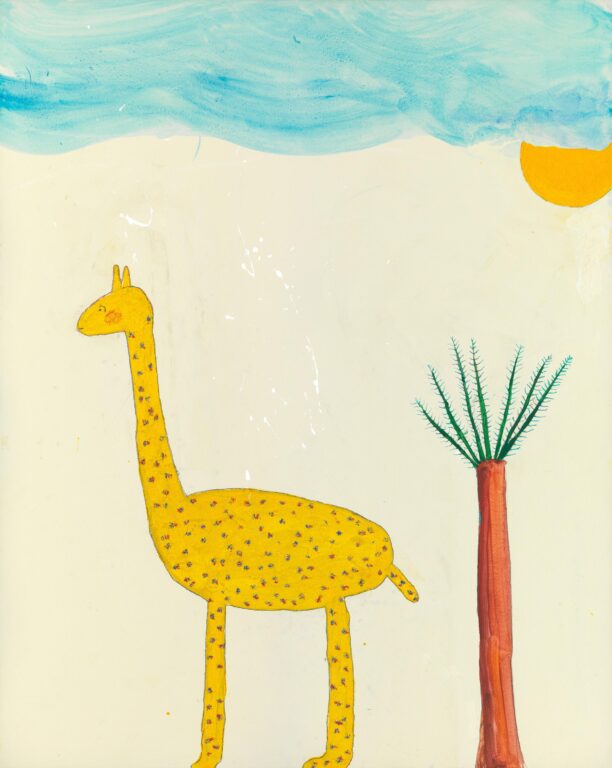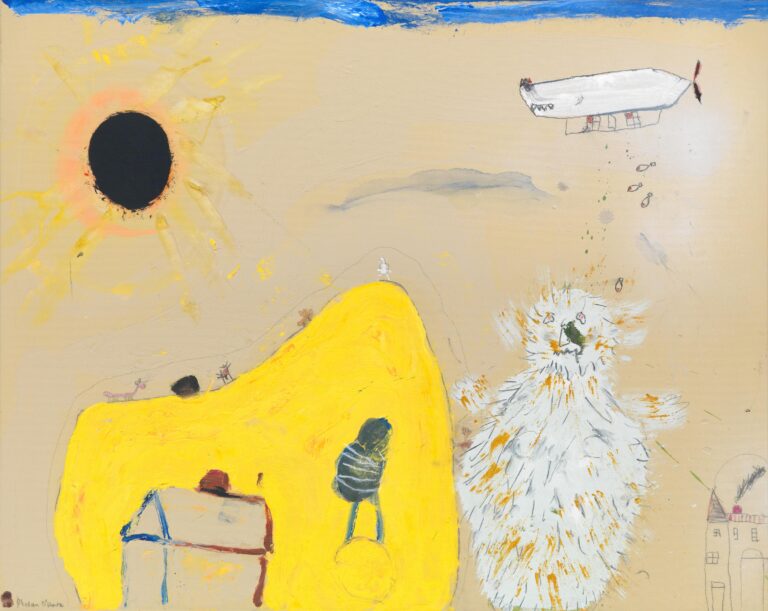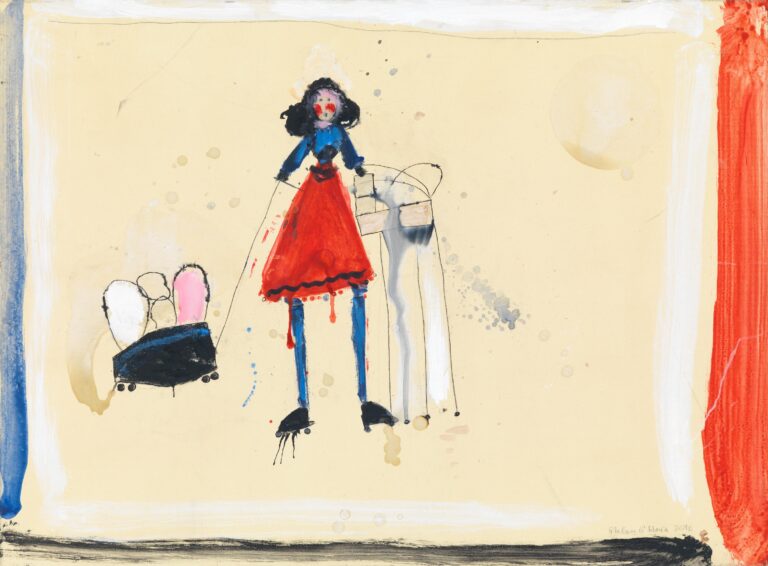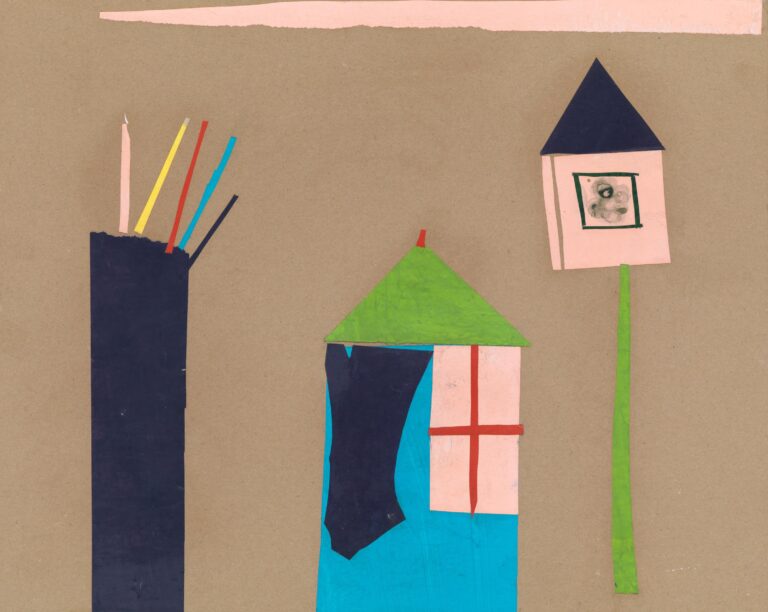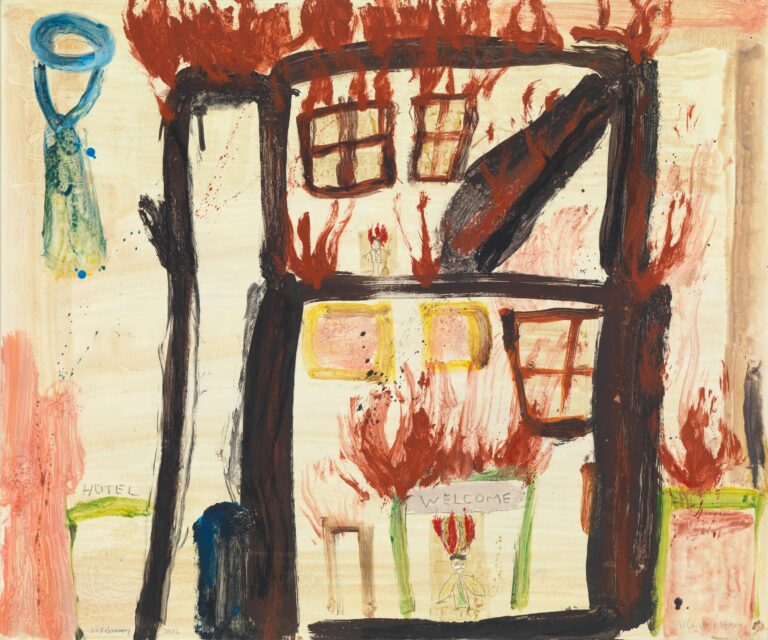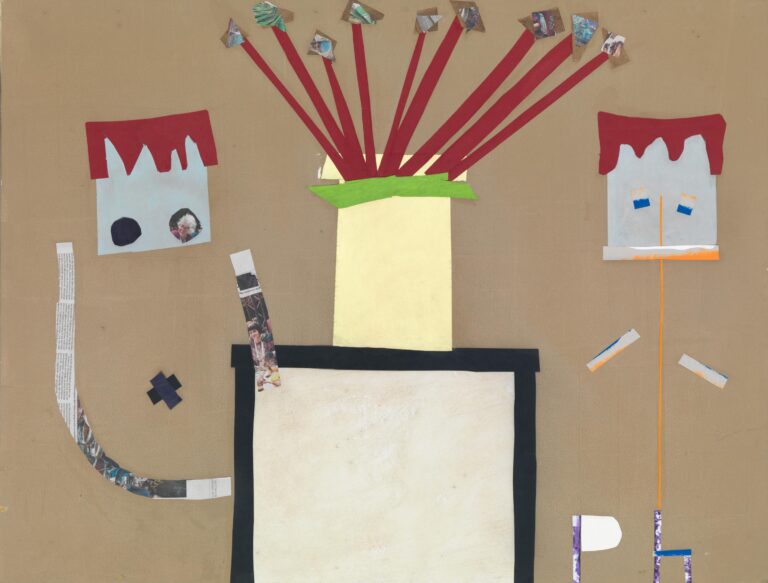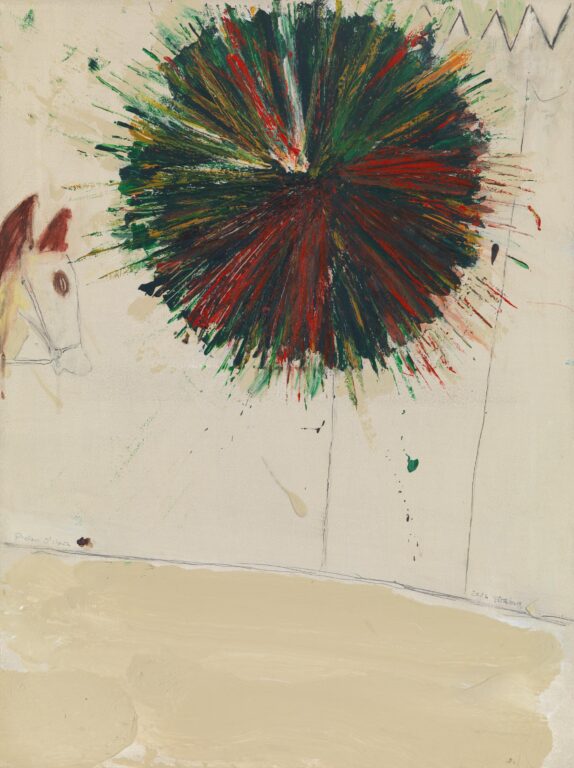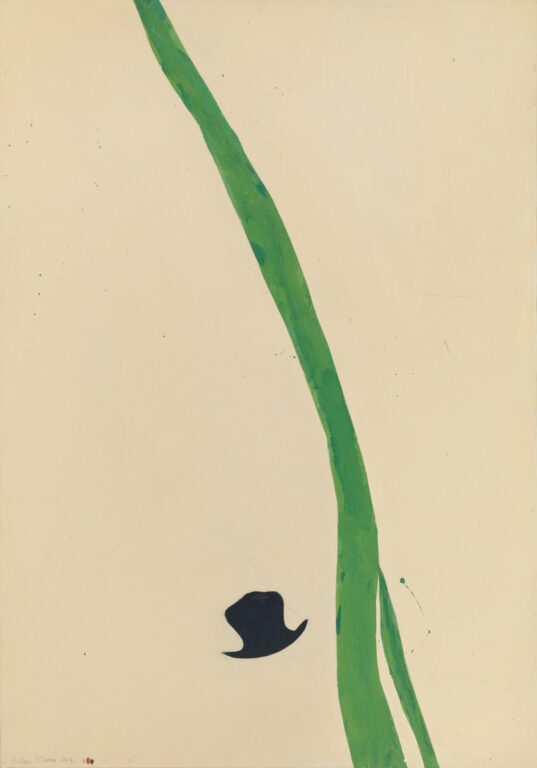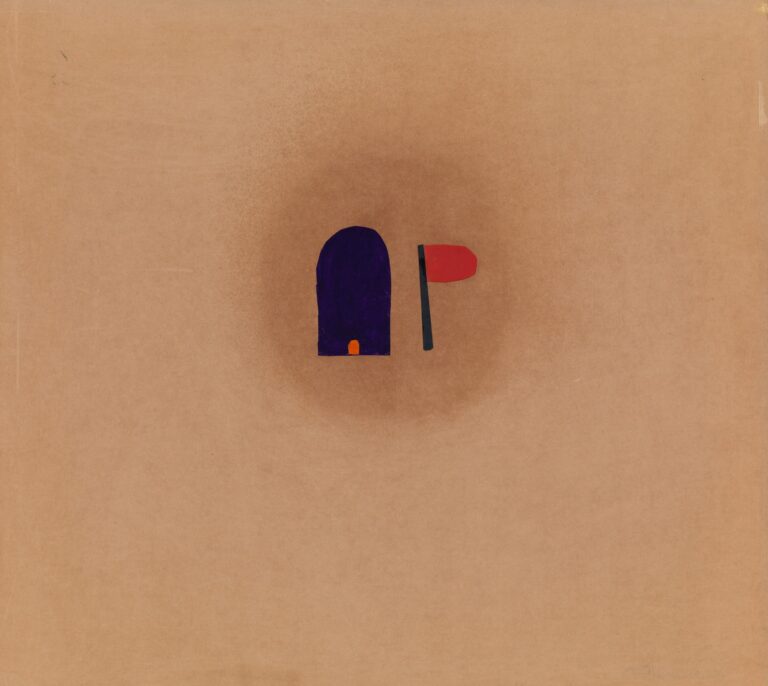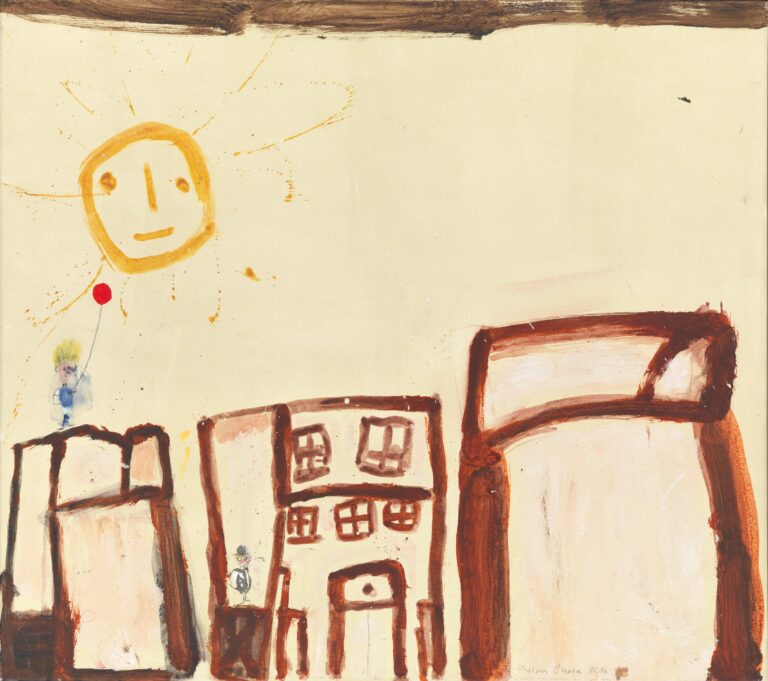
For over 15 years, the British artist Phelan O’Hara (b. 1940) has been painting children’s drawings. These naïve drawings, executed with clumsy strokes on small scraps of paper and thin paper – created more casually than as a mere pastime for children – hold a fascination for him, which he explores by asking the question: What happens when you transfer a child’s drawing to a larger format?
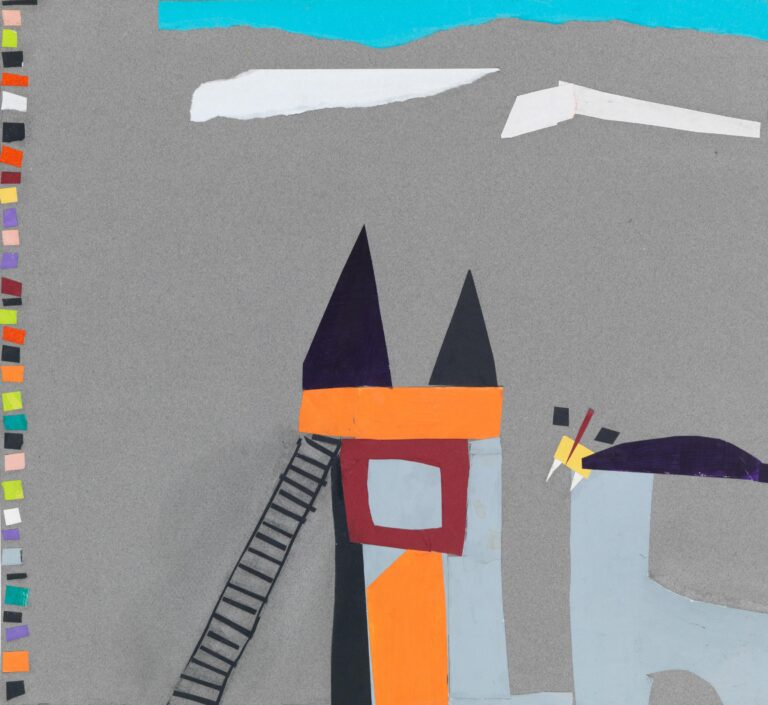
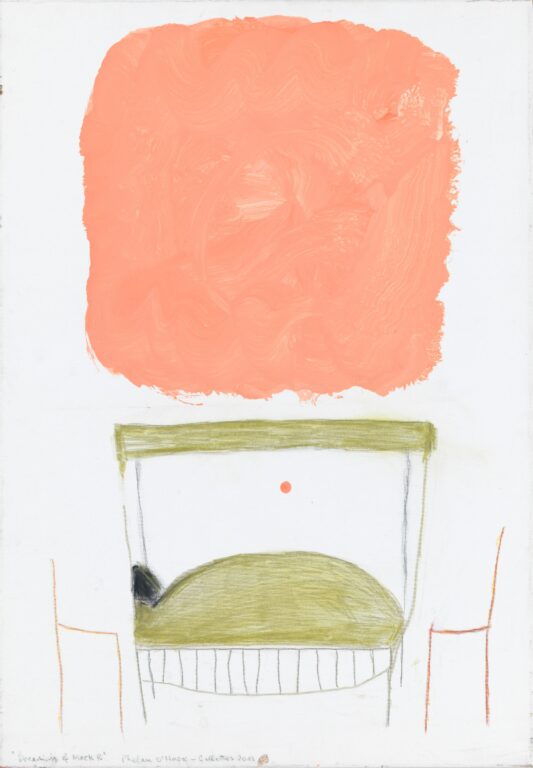
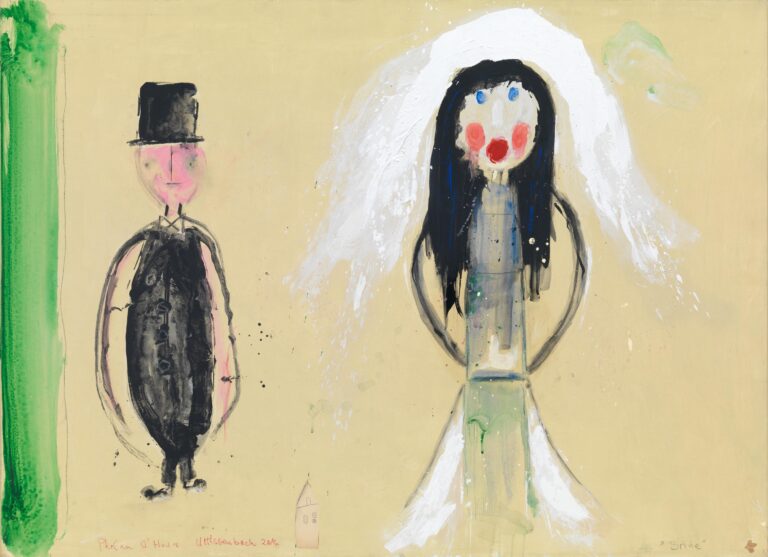
However, the series of works, which is being exhibited for the first time under the title Towards Childhood, is not simply a collection of copies of existing drawings. Rather, O’Hara’s pictures are original compositions drawn from the stereotypical forms and arrangements typical of children’s drawings: the stylised tree beneath a round yellow sun; people and animals with stick-like legs, populating the lower edge of the canvas—which symbolises the ground—and living in houses with triangular roofs. All of this dispenses with realistic perspective and is reduced to the bare essentials in terms of elements and colours. The almost primitive simplicity of the depiction, in the art-historical tradition of Art Brut, is the goal O’Hara strives for (though has not yet achieved).
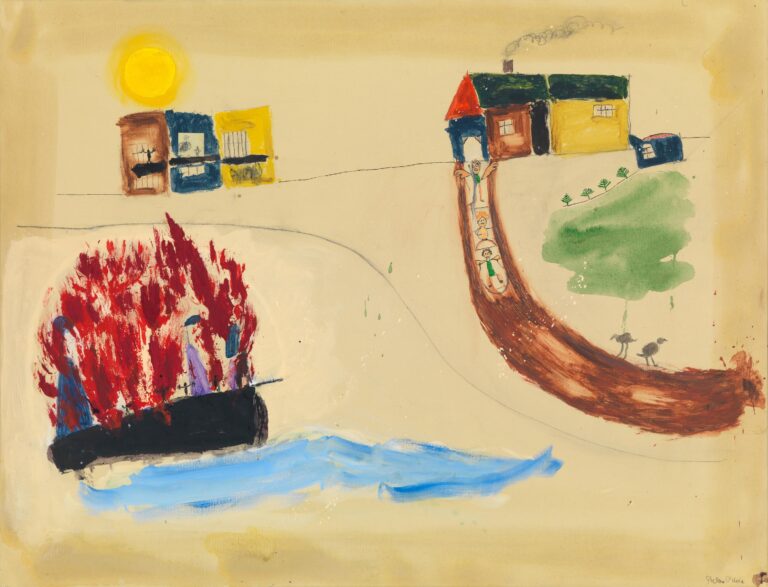
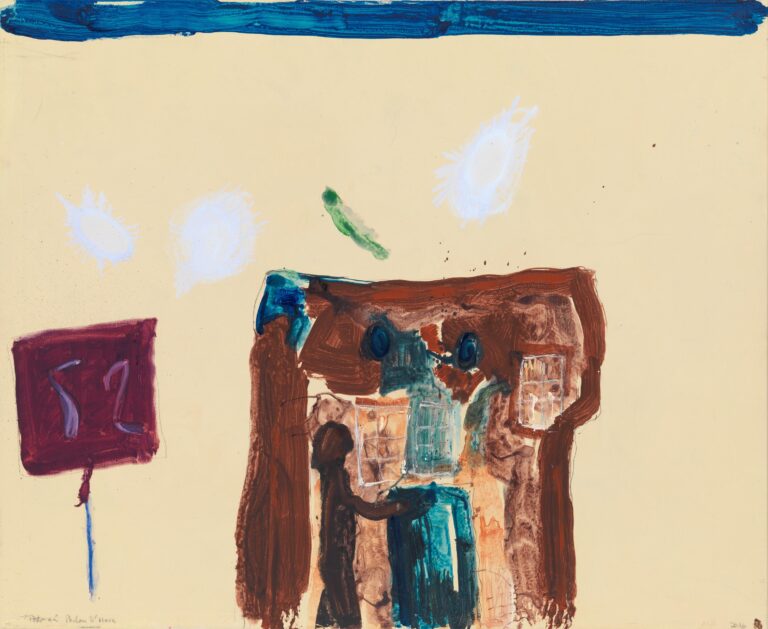
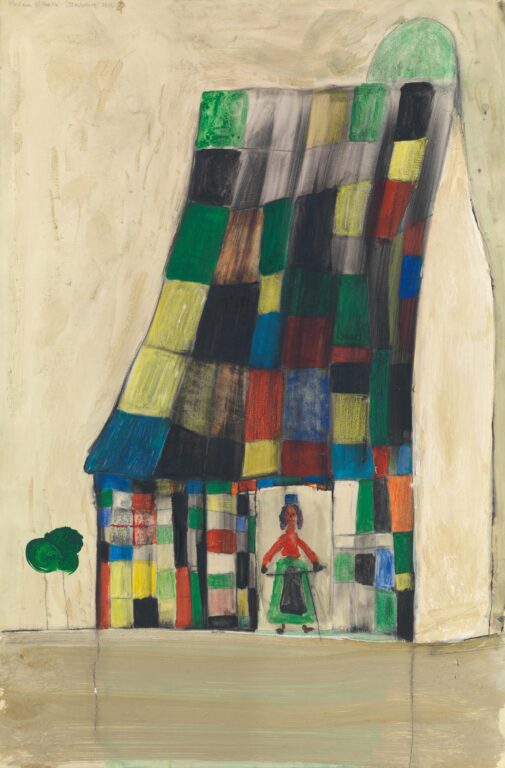
Phelan O’Hara imitates the pre-alphabetic visual language in which children record what they see and experience, and supplements the motifs with his own elements. He draws inspiration from an English fairy tale, the décor of a holiday accommodation, or lyrics from famous songs such as ‘House of the Rising Sun’ – in the doorway of the House of many colours, the stern figure of a mother appears, sewing a pair of jeans for her son in 1960s New Orleans. The humour characteristic of O’Hara’s oeuvre is combined with his knowledge of the past and his awareness of the everyday situations surrounding him.
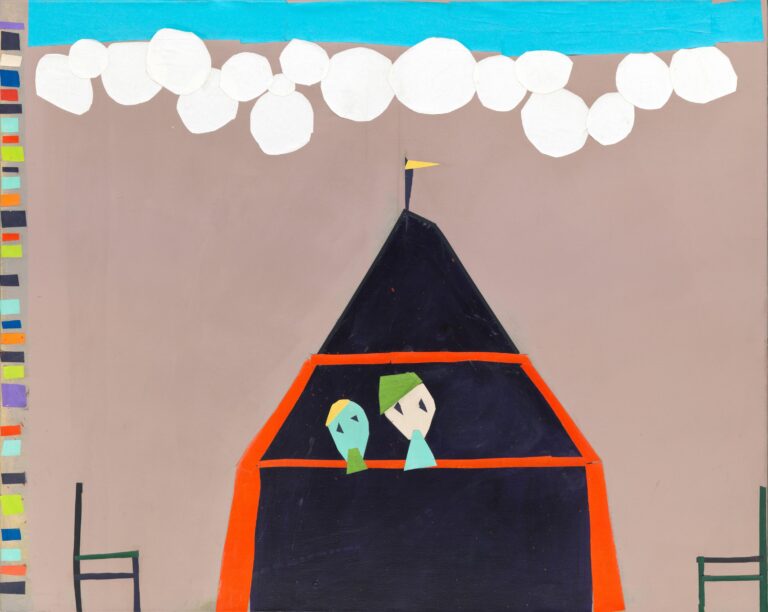
At the same time, working with colour and, in some cases, collage on canvas represents a renewed approach to a form of painting for O’Hara. Through his choice of media, he transposes the drawings into a new medium and establishes their legitimacy as works of art.
———————–
Seit über 15 Jahren malt der britische Künstler Phelan O’Hara (*1940) Kinderbilder. Die naiven, mit unbeholfenem Strich auf kleinen Zetteln und dünnem Papier eher beiläufig, als reine Beschäftigung von Kindern gefertigten Zeichnungen üben eine Faszination auf ihn aus, der er mit der Fragestellung begegnet: Was passiert, wenn man eine Kinderzeichnung in ein größeres Format überträgt?
Bei der Werkserie, die unter dem Titel Towards Childhood erstmals ausgestellt wird, handelt es sich jedoch nicht um einfache Kopien von bestehenden Zeichnungen. Vielmehr sind O’Haras Bilder eigene Kompositionen aus für Kinderzeichnungen übliche, stereotype Formen und Anordnungen: Der stilisierte Baum unter einer gelb-runden Sonne, Menschen und Tiere mit ihren Strichbeinen, die den unteren Rand des Formats, der den Boden symbolisiert, bevölkern und in Häusern mit dreieckigen Dächern leben. All das kommt ohne perspektivisch realistische Darstellung aus und wird auf die nötigsten Elemente und Farben reduziert. Die fast primitive Einfachheit der Darstellung in der kunsthistorischen Tradition der Art brut ist das von O’Hara angestrebte (doch bisher noch unerreichte) Ziel.
Phelan O’Hara imitiert die prä-alphabetische Bild-Sprache, in der Kinder Gesehenes und Erlebtes festhalten, und ergänzt die Motive durch eigene Elemente. Er wird von einem englischen Märchen, der Einrichtung einer Urlaubsunterkunft oder Zitaten aus berühmten Songs wie „House of the Rising Sun“ inspiriert – in der Tür des House of many colors erscheint die gestrenge Gestalt der Mutter, die ihrem Sohn im New Orleans der 1960er Jahre eine Jeans näht. Der für O’Haras OEuvre bezeichnende Humor verbindet sich mit seinem Wissen um Vergangenes und seinem Bewusstsein für ihn umgebende, alltägliche Situationen.
Gleichzeitig ist die Arbeit mit Farbe und teilweise Collage auf Leinwand für O’Hara eine erneute Annäherung an eine Art der Malerei. Durch die Wahl der Mittel überträgt er die Zeichnungen in ein neues Medium und erreicht ihre Legitimation als Kunstwerk.